Varsha Agrawal

education,human eye,eye defect,defect of eye,respiration and breathing,haemoglobin,modal,determiner,preposition,digestion,cell,civil disobedience,which is the largest gland in our body,when which sign is to be used in maths,what are the basics you need to know in maths

EDUCATION

Responsive Ads Here

Sunday, June 16, 2019

Control and coordination

The working together of various organs of a living organism in a systematic, controlled and efficient way to produce a proper response to various stimuli is known as coordination.

All living organisms have a well-organised system, which provides them with control and coordination.

CONTROL AND COORDINATION IN HUMANS:-

In animals including humans, the nervous system along with muscular tissue is the control centre of the body. It consists of highly specialised cells called neurons, nerves and neural organs that link, coordinate and control the activities of different organs in the body.

NERVE CELL OR NEURON:-


Control and coordination


The information from the environment is detected by the nerve cells called neurons. They are the structural and functional unit of the nervous system.
A neuron is the longest cell of the human body. The nervous tissue is made up of a network of nerve cells or neurons.

STRUCTURE OF NEURON OR NERVE CELL:

The neuron is composed of the following main parts:

*
Cell body or Byron

It is the broadly rounded part of the neuron. It has a central nucleus, abundant cytoplasm and various cell organelles except for centrioles.

*
Dendrites

There are the protoplasmic, branched processes of the cell body, which receive and transmit the stimulus.

* Axon

These are a long,fibre-like cytoplasmic process. They conduct impulses away from the cell body. The axon may be covered by a protective sheath called myelin sheath.

* Nerve ending

There are the fine branch-like terminations of neurons.

DIVISIONS OF NERVOUS SYSTEM:


The components of the nervous system can be divided as:

1.. Central Nervous System(CNS):

It comprises the brain and spinal cord. It receives information from all parts of the body and integrates it.

2.. Peripheral Nervous System(PNS):

Communication between the central nervous system and the other parts of the body is facilitated by the peripheral nervous system.
It consists of cranial nerves arising from the brain and spinal nerves arising from the spinal cord.

CENTRAL NERVOUS SYSTEM(CNS):


It consists of the brain and the spinal cord.

HUMAN BRAIN:

The human brain is the main coordinating centre of the body, which enables an organism to think and take decisions. The thinking of the brain involves more complex mechanisms and neural connections. The human brain receives information from the sense organs, interprets it and sends instructions to the muscles or other effectors.
Control and coordination


The three main regions or parts found in the human brain are as follows:

*** FOREBRAIN:

It is the largest, most developed and main thinking part of the brain. It receives sensory impulses from various receptors.

It comprises of:

Cerebrum: 

It acts as the main thinking part of the brain. It is responsible for reasoning, speech, intelligence sight, hearing and usage of information.

There are separate areas of association, where sensory information is interpreted by combining the information from other receptors as well as with information that is already stored in the brain are found in the cerebrum itself these are:

# Sensory areas: 

Receive sensory impulses from various receptors in skin, muscles, eye, ears and nose.

# Association areas: 

Interpret sensory information by relating it to the previous experience and information from the other receptors.

# Motors areas: 

Send impulses to muscles and glands. Also, control the movement of voluntary muscles.

# Olfactory lobes: 

These are a pair of very small, solid, club-shaped bodies widely separated from each other. These are responsible for detecting the smell from different receptors.

# Hypothalamus

This part controls the body temperature, urge for eating, drinking, etc.

*** MIDBRAIN:


It connects forebrain to the hindbrain. It controls the movement of head, neck and trunk to locate sounds and visual reflexes that are involved in focussing on the objects. It also controls reflex movements of eye muscles, pupil size etc.

*** HINDBRAIN:

It provides a connection between the spinal cord and the rest of the brain. It consists of three parts as given below:

# Cerebellum:


It controls and coordinates different muscular actions. It is responsible for the precision of voluntary actions. It maintains posture and equilibrium of the body during various activities such as walking, drinking, riding, catching etc.

# Pons:


It lies above the medulla and takes part in respiration. It relays impulses between different parts of the brain.

# Medulla oblongata:

It is found continuously with the spinal cord. It controls involuntary actions such as breathing, blood pressure(BP) etc.., and regulates reflex responses like salivation and vomiting.

FUNCTIONS OF HUMAN BRAIN:

Major functions of the human brain are:

*  It coordinates activities of the body so that mechanism and hormonal reactions of the bodywork together.

*  It receives information-carrying nerve impulses from all the sensory organs of the body.

*  It correlates the various stimulus from different sense organs and produces an appropriate response.

It responds to the impulses brought in by sensory organs by sending its own instructions to the muscles and glands causing them to function accordingly.

*
  It stores information so that the behaviour of human beings can be modified according to past experiences.

SPINAL CORD:
Control and coordination

It is a long, tubular bundle of nervous tissue arising from the medulla oblongata. It functions primarily in the transmission of neural signals between the brain and the rest of the body.

Protection of Human Brain and Spinal Cord:

The brain is a very delicate organ and is important for a variety of activities. The body is designed in such a way that the brain sits inside a bony box, inside which fluid-filled balloon provides further shock absorption. There is a hard, bumpy structure called vertebral column or backbone, present at in the middle of the back, protects, spinal cord.

PERIPHERAL NERVOUS SYSTEM(PNS):--

It consists of nerves that directly enter or leave the Central Nervous System(CNS) and connect different parts of the body.  It consists of following types of nerves, which carry both sensory and motor neurons.

# CRANIAL NERVES:

These are the nerves, which emerge from the brain and spread throughout the head.

# SPINAL NERVES:

These are the nerves, which arise from the spinal cord along most of its length and spread throughout the body.

# VISCERAL NERVES:

These are the special kind of nerves that mostly arise from the spinal cord and are connected to the internal organs of the body.

So this is a basic of control and coordination which happen in the body of every human beings which we should know also in order to get a perfect view regarding science or to get a perfect knowledge regarding science. I hope this article gives you what you want to get.

Wednesday, May 15, 2019

CELL

Cell is the fundamental unit of life.Depending upon number of cells.

  There are two types of cell:
* Unicellular
* Multicellular

Organism having one cell known as
unicellular organism.
 Organism having multiple cell known as muticellular organism.

CELL ORGANELL:

The organ present inside a cell known as cell organell.Such as nucleus,mitochondria.


* Every organism birth with a single cell after some years it become muticellular organism.

* Every cell is covered by membrane known as cell membrane.

CYTOPLASM:

Cytoplasm is a jelly like structure substance where all cell organell are present.

CELL MEMBRANE: (PLASMA MEMBRANE)

Cell membrane is a outer covering of cell.Because cell membrane allow only certain substances to entry or exit the cell.

Cell membrane is also known as semipermeable.

Cell membrane is made up of phospolipid (liquid and protein).Cell membrane maintain shape of cell and protect the cell.

CELL WALL:


Cell wall made up of cellulose outer most covering of plant.Cell wall is absent on animal.

Cell wall provide rigidity and protect from disaster.After cell wall cell membrane is also present.Cell wall can regenerate itself if it get damaged.

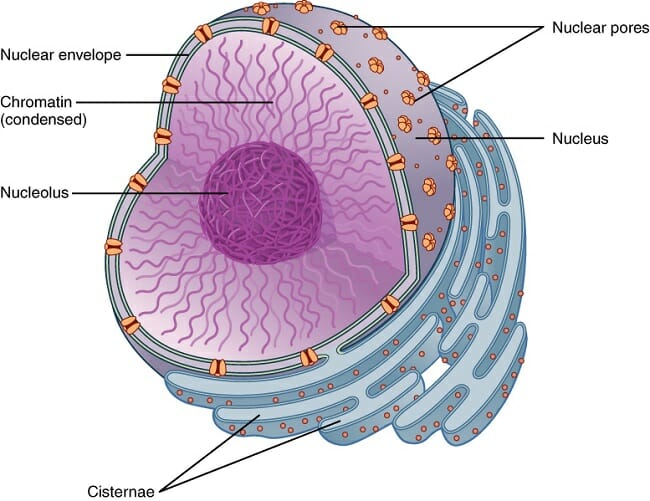
NUCLEUS:

Nucleus is central part of cell.

Nucleus is controlling part of cell.

Nucleus is brain of cell covered by nuclear membrane have nuclear pore allow substance to go inside and outside.

Nucleus has thread like structure known as chromosome but it appear as a rod shaped cell when cell is dividing.

It contain genes which contain heritary information made up of deoxyribo nucleic acid(DNA) and ribonucleic acid (RNA).

Absense of nuclear mambrane is known as nucleoid.


MAIN FUNCTION OF NUCLEUS:

** It helps in division of cell.

** It control all the activity of cell.
Now lets talk about another cell organelle i.e

MITOCHONDRIA:

It is a double membrane organelle.

It has its own deoxyribo nucleic acid(DNA) and proteins thats why it is able to make its own ribosomes.

FUNCTIONS OF MITOCHONDRIA:

** It help in realising energy in form of adenosine triphosphate.

GOLGI APPARATUS FUNCTION:

** It helps in formation of lysosomes.

** It makes simple sugar from complex sugar.

Lysosome:

Lysosome is also known as sucidial bags because if the cell get damaged it's enzymes eat whole cell.

PLASTID:

Plastid is only present in plant and responsible for nanufacture and storage of food.

  Plastid is of three types which are 

*chloroplast 
* chromoplast 
* leucoplast

VACUOLE:

* Vacuole is smaller in animals cell but larger in plant cell.

* Vacuole is bounded by a membrane tonoplast.

*Vacuoles are responsible for storage of food.
   

DIFFERENCE BETWEEN PLANT CELL AND ANIMAL CELL:-


Nothing too much ! I had already told you about this plastids are absent in animals cell ; cell wall are absent in animal cell but add one more thing with this all which is centrosomes ate absent in plant cell and present in animal cell.
   
Atlast at the end of  this essential and informative post we want to just bid goodbye all viewers and our next post will be soon to you.


WHICH IS THE LARGEST GLAND IN OUR BODY?

Liver is the largest gland in our body.Liver secretes bile juice which helps in breaking down of large globules into small globules this process is known as 
emulification.

Liver is a large organ that sits on the right side of belly which is reddish brown in colour and protected by ribcage and gall bladder sits under the liver along with pancrease and intestine.

FUNCTION OF LIVER:-

* Liver help in filtering the blood.

* Liver help in protein for clotting of blood.

DIGESTION IN HUMAN BEINGS:
Whenever we eat food then we chew it,grind it,tear it using our teeth and saliva present in our mouth contains an enzyme known
as salivary amylase which break down starch into simple sugars then food travels.

Along the elemantary canal then it reach stomach  where gastric gland release HCL which help an protein enzyme pepsin help in changing protein into protease and mucus protect the inner lining of stomach from acidic medium created by HCL.

 Then the food reach small 
intestine it can be completely 
digested here through bile juice 
and trypsin then after breaking 
down of this the food materials get
 excreated by anus.

VILLI:

Villi is present in small intestine help in increasing the surface area of small imtestine. 


DIGESTION

METABOLIC PROCESS:

The process which are not in our
 control.

Example: Digesion,Respiration,
Excreation and Transportation.

DIGESTION:

Digestion is a metabolic process in which the complex food is break down into simpler ones by catalyst.

DIGESTION PROCESS


CATALYST:

Involving reaction.

SALIVARY GLANDS:

There are three salivary gland 
present in the mouth which secrete saliva(water) which convert starch
 into simple sugar.

PERISTALISIS:

Peristalisis is a movement of muscles in elementary anal which push the food forward.

LIVER:

Liver release bile juice.And it is a largest gland in our body.

PANCREATIC GLAND:

Pancreatic gland release pancreatic juices like trypsin.

GASTRIC GLAND:

Gastric gland release hydrochloriccid which create an acidic medium in stomach.

Hydrochloric acid  helps a enzyme present in stomach.

i.e pepsin to breakdown proteins and to protect our stomach from this acid there is one more thing mucus.

Breaking down of food in stomach:-

Breaking of this food starts in mouth .In mouth there are three salivary glands which release an enzyme known as salivary amylase.

This enzyme breakdown starch then the food pass through foodpipe and when reach stomach breakdown again gets started.

Liver secretions bile juice helps to breakdown fat globules and this process is known as emulsification and other nutrients also gets breakdown by lipase and pancreatic secretions and then all food goes to anus by help of anus sphincter.

Mind one more thing the complete digestion  happens in small intestine but size of small intestine differ in all ex. cow eats grass which contains cellulose and it is not easily digestable and they need larger small intestine and animals need small intestine.

Villi:


This is present in small intestine to increase or to decrease size of small intestine.

DIGESTION IN PLANTS:

Plants are autotrophic(those who make there own food).Plants make there own food through the process of photosynthesis.

PHOTOSYNTHESIS: HOW THIS PROCESS WORK ?

There are some green dots in the leafs of plants which are known as chloroplast which contains some pigments known as chlorophyll whuch are green in colour and gives green colour to leafs.

* There are important factors which are needed for photosynthesis which is sunlight and carbon dioxide ( co2),chlorophyll, water.

The raw material for photosynthesis are carbon dioxide and water.The end products of photosynthesis is glucose(carbohydrate) and oxygen.

Carbojydrates are utilised for providing energy to the plant.The remaining carbohydrates,which are not used immediately are stored in the form of starch.It serves as the internal energy reserve and is used by the plant whenever required.Glycogen serves as an internal energy reserve to be used when required in animals.

EVENTS IN PHOTOSYNTHESIS:

Major events that occur during the process of photosynthesis are:-

* Absorption of light energy by chlorophyll.

* Conversion of light energy into chemical energy and splitting of water molecules into hydrogen and oxygen.

*  Reduction of carbon dioxide to carbohydrates.


Tuesday, May 14, 2019

CIVIL DISOBEDIENCE MOVEMENT

At the time of British colonial
 the rule when the British government is ruling over India.

Gandhi Ji demanded eleven rules in which two extra added rules are 
civil disobedience and salt march.

CIVIL DISOBEDIENCE MOVEMENT—


Civil disobedience movement

In civil 
disobedience, they will not obey the British government and also said that fulfil their demands till
 11 march and if the British government does not fulfil their demands till 11 march so  Gandhi Ji will start a new campaign known as salt march also known as a dandi march.

Many people participated in this movement and it let to success but
 at last the British government arrested all the people including Gandhi Ji and started punishing and beating all the people and asked Gandhi Ji that if he agrees for a second round table conference in London.  Then they will acquit all the people.

Afterwards, Gandhi Ji agree to this
And the Britishers leave all the people.

In December 1931 Gandhiji went to London for the conference, but the negotiations broke down and he returned disappointed.  When Gandhiji returned back to India he discovered that the government had begun a new cycle of repression. Ghaffar Khan and Jawaharlal Nehru were both in jail.
By seeing that Gandhiji thought to relaunched the Civil Disobedience Movement.

The rich peasants like Patidar of a Gujarat and jats of UttarPradesh became enthusiastic supporters of the Civil Movement. As their cash income disappeared, they found it impossible to pay the government revenue demand.
Civil disobedience movement


But they were deeply disappointed when the movement was called off in 1931 without the revenue rates being revised.  So when the movement was restarted in 1932, many of them refused to participants.

And the peoples start demanded no rent campaign.

During the first world war,  Indian merchants and industrialist had made a huge profit and become powerful.
They started reacted against colonial policies that restricted business activities.

They wanted protection against imports of foreign goods, and a rupee sterling foreign exchange ratio that would discourage imports.

They formed the Indian Industrial and Commercial Congress in 1920 and the Federation of the Indian chamber of commerce and industries(FICCI) in 1927.

They supported the Civil Disobedience Movement when it was launched. But after the failure of the Civil Disobedience Movement, they felt disappointed and they did not participate in the civil disobedience movement this time.

Whereas Women participate in Civil Disobedience at large number.

It is not over yet not all the peoples are participated in the civil disobedience movement.

THE LIMITS OF CIVIL DISOBEDIENCE:

Not all social groups were moved by the abstract concept of swaraj.
 One such group was the nation's "untouchables", who from around 1930s had begun to call themselves Dalit or oppressed.

For long the Congress leaders ignored the Dalits from the fear of offending the satanic, the conservative high caste Hindus.
Civil disobedience movement


But Mahatma Gandhi declared that swaraj would not come for a hundred years if untouchability was not eliminated. He called the untouchables Harijan or children of God

Gandhiji organised satyagraha to secure them entry into temples, and access to public wells, tanks, roads and schools.

He himself cleaned toilets to dignify the work of the bhangi(the sweepers) and persuaded upper castes to change their heart and give up the sin of untouchability.
But many Dalit leaders were keen on a different political solution to the problems of the community.

They began organising themselves, demanding reserved seats in educational institutions, and a separate electorate that would choose Dalit members for legislative councils.

Political empowerment, they believed, would resolve the problems of their social disabilities. Dalit participation in the Civil Disobedience Movement was therefore limited, particularly in the Maharashtra and Nagpur region where their organisation was quite strong.

Dr B.R. Ambedkar who organised the Dalits into Depressed Classes Association in 1930, clashed with Mahatma Gandhi at second Round Table Conference by demanding separate electorates for Dalits.

When the British government conceded Ambedkar's demand, Gandhiji began a fast unto death.  He believed that separate electorates for Dalits would slow down the process of their integration into society.

Ambedkar ultimately accepted Gandhiji position and the result was the Poona pact of September 1932. It gave the Depressed Classes reserved seats in the provincial and central legislative council, but they were to be voted in by the general electorate.

Some of the Muslim political organisations in India were also lukewarm in their response to the Civil Disobedience Movement. After the decline of the Non-Cooperation-Khilafat movement, a large section of Muslims felt alienated from the congress.

From the mid-1920s the congress came to be more visibly associated with openly Hindu religious nationalist groups like the Hindu Mahasabha.

 As relations between Hindus and Muslims worsened, each community organised religious processions with militant fervour, provoking Hindu-Muslim communal clashes and riots in various cities. Every riot deepened the distance between the two communities.

The Congress and the Muslim League made efforts to renegotiate an alliance, and in 1927 it appeared that such a unity could be forged.

The important differences were over the question of representation in the future assemblies that were to be elected.

Muhammad Ali Jinnah, one of the leaders of the Muslim League, was willing to give up the demand for separate electorates if Muslim were assured reserved seats in the Central Assembly and representation in proportion to population in the Muslim-dominated provinces.

Negotiations over the question of representation continued but all hope of resolving the issue at the All Parties Conference in 1928 disappeared when M.R.jayakar if the Hindu Mahasabha strongly opposed efforts at compromise.

When the Civil Disobedience Movement started there was thus an atmosphere of suspicion and distrust between communities.

Alienated from the congress, large sections of Muslim could not respond to the call for a united struggle.

Many Muslim leaders and intellectuals expressed their concern about the status of Muslims as a minority within India.

They feared that the culture and identity of minorities would be submerged under the domination of a Hindu majority.

So I hope you understand the story behind civil disobedience movement.


Monday, May 13, 2019

HOW CAN WE INCREASE OUR HEIGHT?

Peoples are suffering from innumerable problems in their life like some person are concerned about there business, some regarding jobs, some due to study and some are because of there body, like the style in this category the big problem is how to increase our height?

HOW CAN WE INCREASE OUR HEIGHT?


how to increase our height?

In the today era, everyone is thinking about how to increase there height to look smart. of course, everyone wants to look smart in this world.

All the people's have there owned thinking regarding smartness i.e. some people think that they are looked smart by wearing shoes, watches etc., All are having there own thinking regarding smartness.

Peoples can look smart by wearing classy dresses, by looking skinny and by increasing there height. That's is the main reason why people want their height should be increased.

Some parents are also concerned for there children who are above the age of 14-15 years old and their children's height is still not increasing.


They all are doing so many efforts, so many things to increase their height. But nothing happens right!! because these all things are vain this will not help in increasing your height by drinking bournvita and all and all.


These only affect your body from inside. But don't worry you reach to your goal. I will tell you how to increase height? 


There are a lot of ways to increase height. I have seen many people

who try to increase there height but they were not able to do this.

So you can increase your height by skipping rope daily at least half an hour or one hour in

how to increase our height?
different way. This will not only help to increase your height but
also, help in reducing your weight.

Or you can decide how much times you should jump instead of jumping for one hour or half an hour.


From this, you did not feel fatigued also in jumping you did not need to see time also again and again.RIGHT!!. In my opinion, you should jump a thousand times in a single day.


And that thousand times should be divided into ten equal parts. In each one part, you should jump a hundred times or you can jump more than a hundred times if you can and it is not a necessity.


Then you can calculate that how much time you jumped that is a (i.e) hundred is to multiply by 10 we got what YES" right°° we got thousand RIGHT" that is(i.e) (100×10 =1000).


So now I think you understood how to jump and how to increase height RIGHT√.


If you did not want to skip rope or if you get fatigued by skipping the rope as some people or children are lazy RIGHT!!. I hope you don't mind from this.


I am just joking.OKAY''.


There is also a very simple or easy way to increase height by taking high top syrup.


It is a syrup which you have to take daily two times in a day. If your age is above 12 years otherwise you need to take one time in a day.


One time you can take after eating lunch you have to take two syrup at a time and another time where you have to take this syrup is after dinner this time also you have to take two spoons of syrup.


Or you can also do both the things in a single day.  You can skip a rope and take syrup also in a single day.

So in this way you can increase your height easily without any much efforts.

WHEN DO WE KNOW THAT OUR HEIGHT IS INCREASE?


It is also a very big problem that how we know that our height is increased or not so it is very easy to know that our height is increased or not...


* So the first thing which shows regarding our height is when you walk if you think or feel that the distance of floor is increased from your eyesight then it means your height is increased and if you don't feel or think that it means your height is not increased.


* The second thing which shows regarding your height increased or not is when somebody tells you that your height increased it can be anyone maybe it is your parents, teachers, friends, neighbours, etc.


* The third thing which shows regarding your height increased or not is when you will be able to do which earlier you had not able to do.


 For example, earlier you were not able to ring the bell of the temple if your height is increased you will be able to ring the bell.


* The fourth one is when you seem thinner than earlier you were as with the increase in height weight is used to shift towards our head then our downside portion seems thinner.

* The fifth one is which show your height is increased or not is to check from height checker.

* And the last one is which tell your height is increased or not is when you will compare it with others either by family members, friends relatives etc., who are smaller or larger than you.

So in this way you can get to know that your height is increased or not.

Is it easy and I can give a word to you because my brother also had done the same thing his height was also not increasing then he started skipping a rope and taking syrup after doing this all thing his height start increasing.


And he also got to know by doing all the things what I explained in the above paragraphs. Like him, anyone can do the same thing and increase there height and also will be able to know that your height is increased or not.

If you also want that your height will be increased you can try this way this is a very simple way to increase height.


I hope this article is very helpful for you it gives exactly what you want i.e. you understand how a person can increase there height. I hope you will be able to increase your height by following all process which describes in the above definition.

Sunday, May 12, 2019

RESPIRATION AND BREATHING

RESPIRATION AND BREATHING:–

As we all know that we can not survive without oxygen and we take oxygen from our lungs this process is called respiration and breathing in the scientific term.

So let's understand these two important terms:-

BREATHING:
It is a process of inhalation and exhalation of gases.

RESPIRATION:

Respiration is defined as the process of biochemical oxidation of nutrients at the cellular level. It occurs in the presence of specific enzymes at optimum temperature in the cells to release energy for various metabometabolices.


It is a catabolic process in which exchanges of gases(viz oxygen and carbon dioxide)takes place between the body and outside environment. The process is a complete way can be written in the form of the equation as:

Food+Oxygen—Carbon dioxide+Water+Energy

The organic substances undergoing oxidative breakdown during respiration are called respiratory substrates,e.g.glucose.

The biochemical oxidation of nutrients takes place in different ways in different organisms. Some organisms use oxygen to breakdown glucose completely into carbon dioxide and water, while others do not require oxygen and carry it out in the absence of oxygen.

DIFFERENCE BETWEEN RESPIRATION AND BREATHING:


# In respiration there
 is the production of glucose which helps in making energy whereas In breathing there is no production of glucose.

TYPES OF RESPIRATION:


There were two types 
of respiration are:

* AEROBIC:


Aerobic is the process in which a large amount of energy is realised in the presence of 
oxygen(air) from the breakdown of
 food substances.


It is this process starts in the cytoplasm and continues in the mitochmitochondriaaacell.
Water and carbon dioxide are produced as waste products.
The energy released during this process is used for all other life processes. The release of energy in aerobic process is much more than in the anaerobic process.

* ANAEROBIC:


Anaerobic is the respiratory process in which a small amount of energy is realised in the absence of oxygen (air) from the breakdown of food substances. It takes place in yeast, bacteria and in human muscles.

Anaerobic respiration is termed as fermentation in microorganisms. On the basis of the products formed it is categorised as:

(i) Alcoholic Fermentation-


An incomplete breakdown of sugar into ethanol and carbon dioxide to release energy is called alcoholic fermentation. This process occurs mainly in yeast, which is used to produce beer, wine, toddy, cheese etc. by brewing.

(ii) Lactic Acid Fermentation-

It is the process of the incomplete breakdown of sugar into lactic acid and energy in some bacteria,e.g.in yoghurt some bacteria cause milk to turn sour.

These bacteria feed on sugar and break it into lactic acid.
In human muscles, during vigorous physical exercise, glucose is metabolised to form lactic acid. The accumulation of lactic acid causes fatigue and muscle cramps after prolonged exercises.

It can be summarised as :


STAGES OF RESPIRATION...

Generally, respiration consists of the following two basic stages:

** External Respiration

(a) Breathing:

 It is the process of taking (inhaling)the required gases.e.g.an aerobic organism such as human beings takes in oxygen(O2) and gives out carbon dioxide(CO2).

(b) Gaseous exchange

It involves diffusion of O2 from lungs to blood and CO2 from blood to lungs. In plants, gaseous exchange takes place through stomata of the leaf with the environment.

** Internal Respiration

It refers to the gaseous exchange between arterial blood and the body cells.


HUMAN RESPIRATORY SYSTEM:

Like other animals, respiratory system in human beings serves to provide fresh oxygen to all body cells and removes harmful carbon dioxide from the body.

PARTS AND FUNCTION OF RESPIRATORY SYSTEM:-

NOSTRILS:

Air is taken into the body through nostrils. It is lined by fine hair and mucus which helps to filter the air entering through it.

NASAL PASSAGE:

Air entering the nostrils leads to the nasal passage. It is mainly responsible for conditioning the air.

PHARYNX:

The nasal chamber opens into the pharynx. It passes air to the larynx.

LARYNX:

It is located in the neck region and in front of the trachea. It also produces sound.

TRACHEA:

The air passes from the pharynx and goes into the trachea. Incomplete rings of cartilage keep trachea open allowing the passage of air to the lungs and also prevent it from collapsing when there is no air in it.

BRONCHI:

The trachea divides into two smaller tubes called bronchi after entering the thoracic cavity, which further extends into each lung.

BRONCHIOLES:

Bronchi are subdivided into smaller tubes called bronchioles. Each hole finally termimaterminatessny alveoli.

ALVEOLI:

These are ballon like structure located inside the lungs. A large number of alveoli increases the surface area for the exchange of gases. Human alveolar surface when spread can cover an area of 80m2.

RIBS:

These are 12 pairs of bones that form a cage in the thoracic region. Lungs and heart are safely placed in it. Movement of intercostal muscles attached to ribs helps in breathing.

LUNGS:

These are primary organs for respiration, which are located on the two sides of the heart. They transport O2 from the atmosphere enclosed by protective membranes called pleura.

DIAPHRAGM:

It is a muscular petition thorax and abdomen and fos those chest cavity. During inhalation, it flattens and increases chest cavity so that air is sucked into the lungs, while it relaxes during exhalation.

MECHANISM OF GASEOUS EXCHANGE IN HUMANS


Human beings take in oxygen from the atmosphere and release carbon dioxide in return(expiration). This complete process occurs in breathing. The mechanism for moving the oxygen and carbon dioxide out in human beings is termed as gaseous exchange.

It gets completed in three main steps as ...

1.. Inhalation

The process of taking in oxygen from the atmosphere.

2.. Exchange of Oxygen and Carbon Dioxide in alveoli

The walls of alveoli contain an extensive network of blood vessels. The sequence of exchange of oxygen and carbon dioxide,  which occurs between blood vessels and alveoli.

During the breathing cycle,  when air is taken in and let out, the lungs always contain a residual volume of air. It provides sufficient time for oxygen to be absorbed and for carbon dioxide to be released.

3.. Exhalation

It is the process of giving out carbon dioxide from the lungs to the atmosphere.

Now I hope you understand both the term i.e respiration and breathing that how these both help to make our long life.